Tag Archives: worship songs

Album review: Songs from the Book of Luke

TGC’s first album, “Songs for the Book of Luke” was released yesterday and is being unashamedly marketed far and wide on the conservative-reformed web as I write this.

Here’s my thoughts after listening to the album:

  • I’m thankful that so many people are captured by a vision to sing “songs about the glory of God and the wonder of redemption”.
  • I like the new-old idea of getting pastor-theologians involved in the songwriting process (for example, “Our Hearts Still Burn”, a meditation on Luke 24, is written by DA Carson)
  • I’m thankful to hear and see so much musical creativity from local churches in the US flow so freely through each song

The words are great and well-thought out (each one is inspired by a different part of the gospel of Luke), and the musicianship on each album is excellent. So if this were an album just to listen to, I’d be over the moon with it.

Yet Ben Peays writes in announcing this album:

After a nation-wide call for entries, more than 200 songs were submitted. Those were narrowed down to this collection of 13 songs, all rooted in the scriptures, all written for local congregations.

And the About the Project blurb states:

 Most of all, we hope that as you listen, as you sing, and as churches consider singing these songs, you’ll be refreshed and reminded once again of the richness of the Book of Luke and the glory of our Savior.

So the stated aim is new songs for congregational use. And because of that, I have some further thoughts on that:

  • The melodies in quite a few of these songs (e.g. “Lift Up Your Head”, “Come to the Feast”, “For Your Sake”) have that singer-songwriter feel to it that make them very easy to listen to, but too sophisticated and for the average churchgoer to pick up easily (the wide vocal range of some of the songs don’t help either). The one exception so far which stuck out as quite singable is “Not in Me” by Eric Schumacher and David Ward, perhaps because of its simple tune and hymn meter.
  • There’s a couple of different genres represented but the songs are mostly based around the alternative/indie paradigm (e.g. “Authority of Christ”, “Our Hearts Still Burn”). Perhaps it’s because the recording band was put together by Sojourn Music. It makes each song great to turn up on my headphones, but it’s hard to envisage how to lead these songs for a church vs. the performance tracks I’m listening to. Also if you’re someone with a strong preference for one musical style, you’ll either love this album or be turned off before the first track is over.
  • I almost wished each song on the album was re-recorded with just a guitar/piano and vocal to get a better sense of how to use them for gathered worship. I know the album comes with lots of reinforcements in the form of sheet music and chord charts. And the “Learn the Song” videos perhaps was how they tried to answer this, but I don’t know if that’s enough to give smaller churches the confidence to try many of these songs (especially once the umpteeth electric guitar vamp blasts through).


But let me end with some of the words from “Not in Me”, which is my favourite song from the album (“Our Hearts Still Burn” is my second-favourite). The writers describe it as follows:

What would it sound like for the Pharisee in Luke 18:9-14 to repent? His prayer begins proclaiming what he has not done, with a list of people he is “not like”. So, repentance must be renouncing such boasts before God. In the end, the repenting Pharisee’s prayer is the same as the tax collector’s. Ultimately, whether for a Pharisee or a tax-collector, there is only one Gospel, one hope of salvation. God shows mercy to sinners, self-righteous or self-loathing, on the basis of Christ crucified and risen. In the end, neither can earn his forgiveness or merit a standing.

We’re both the tax collector and the Pharisee. One moment, we are wallowing in our sin, relenting of any hope due to the greatness of our evil. The next moment, we are boasting of our own righteousness and finding comfort in our external goodness and self-control. We need songs that preach the Gospel to us in and lift us out of the ditches on both sides of the road.

Here’s some of the lyrics:

No list of sins I have not done, no list of virtues I pursue,
No list of those I am not like can earn myself a place with you.
O God! Be merciful to me. I am a sinner through and through.
My only hope of righteousness is not in me, but only you

No humble dress, no fervent prayer, no lifted hands no tearful song,
No recitation of the truth can justify a single wrong.
My righteousness is Jesus’ life. My debt was paid by Jesus’s death.
My weary load was borne by Him And He alone can give me rest.


Amen to that!

—————————

Video: Jesus Your Blood and Righteousness

Loved singing this arrangement by Ruth Buchanan when we were at YLC (now called Equip Conference).

Strangely enough, after searching everywhere, we couldn’t find a recording of it, nor any sheet music to help.

So we made our own – just me and a guitar (and Cheryl humming in the background).


Hopefully it’ll be useful for others too.

I’ve also created a chord chart here: Jesus Your Blood And Righteousness [Ruth Buchanan] – D

Verse 1
Jesus, your blood and righteousness,
my beauty are, my glorious dress;
Mid flaming worlds, in these arrayed,
with joy shall I lift up my head;
With joy shall I lift up my head.

Verse 2
Bold shall I stand in that great day,
and none condemn me, try who may;
Fully absolved, through Christ I am,
from sin and fear, from guilt and shame;
From sin and fear, from guilt and shame.

Verse 3
This stainless robe its beauty wears,
when all else fades in passing years,
no age can change its glorious hue,
the robe of Christ is ever new;
The robe of Christ is ever new.

Verse 4
When from the dust of death I arise,
to claim my home beyond the skies;
Then this shall be my only plea,
that Jesus died and lives for me;
That Jesus died and lives for me.

Verse 5
So shall the dead now hear your voice,
let those once lost in sin rejoice;
Their beauty this, their glorious dress,
Jesus, your blood and righteousness;
Jesus, your blood and righteousness.

Words by Nicolaus L. von Zinzendorf
Arrangement by Ruth Buchanan
Copyright 1996 AFES.

First recorded on “Crowding the Gates” (http://sub.afes.org.au/_product/view-product?id=935aa23a8feda696a4370104c161bf17)

———————

(p.s.: for a list of all the songs we sang at the 2013 YLC conference, I made a list here).

US Holiday/WG11 Conference – rehearse, seminars, NZ connection, Enfield, Thabite

Day 2 of WorshipGod 11.

A full day of 2 general sessions and 2 seminars, as well as dinner with a family with strong NZ connections. Wow, thank you Lord for such an amazing day!

20110813-083253.jpg

Rehearse

There was some more comedy from Mark Altrogge in the morning (it seems like a WorshipGod thing for Mark to encourage and make us laugh with the things he says!)

20110813-115648.jpg

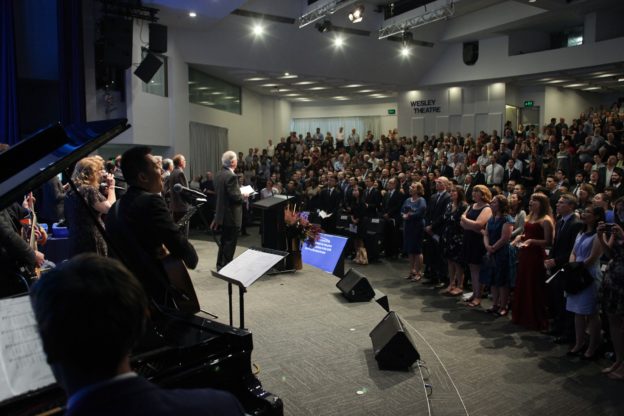
Rich Gunderlock and the Bairds led us in singing this morning. This included some songs they had written, including “Completely Done”. I appreciated the way they pointed to Jesus through singing, praying, Scripture reading and words of encouragement.

20110813-115659.jpg

The teaching this morning was from Bryan Chapell. He’s written a book called “Christ-centered Worship” which I’ve bought, look forward to reading it soon!

Bryan Chapell taught from Isaiah 6 as a picture or rehearsal of the gospel, and how it can inform the way our services can similarly help us to rehearse the gospel progression: from glory, to grace, to mission.

(Note: You can listen to the MP3 of the message here)

Seminars

We split up and attended two seminars during the afternoon.

William
The first one (run by Bob) covered principles and suggestions when thinking through how to choose songs. There were plenty of really good ideas and things to consider – will be looking forward to see how to apply them when I’m choosing songs in the future.

20110813-115818.jpg

The next seminar was even more interesting – a few worship bands signed up to play a song each. Bob gave feedback, encouragement and constructive feedback. What was particularly valuable was some of the comments about band dynamics, voicing, arrangements etc that Bob gave from his accumulated experience with contemporary praise bands.

Cheryl
Two workshops by Doug Gould, a sound technician at Covenant Life Church, were very helpful. Lots of good explanations for how to reduce stage noise, how different types of microphones work and what they’re useful for, and more. These are workshops and learnings our own sound engineers at HBC would be blessed by.

Thabite

For the evening session, Thabite Anyawile – the Caribbean Spurgeon – brought the Word to us from 1 Timothy 4, emphasizing that the Word of God is to be central in our preaching. I would recommend this message in particular to both pastors and worship leaders, as there are principles and applications for both. If the Word is to be central in our gatherings, both should be on the same page!

(Note: You can listen to the MP3 of the message here)

——————–

Some miscellaneous highlights:

    • The worship in song tonight was led by Enfield – and the energy and zeal they had was AWESOME!

20110813-120229.jpg

  • We got to have dinner with a family who have a special love for New Zealand. Susan Perdue spent some time in Taranaki as an exchange student in NZ, and still have special connections with her adopted parents that she stayed with. Philip and Susan have three children who are all very talented musicians – their eldest son, Chris, showed me his mandolin – what a neat instrument!


20110813-120030.jpg


  • It’s a fascinating experience being in a church where there’s a traffic cop to direct traffic in, and where there’s traffic jams after each session. wow.


Next: More seminars, Joseph, Live album recording

——————

Update (26/08/2011): here’s the full series of our time in the USA.

Part 1: Fly, land, drive
Part 2: train, jam, steak
Part 3: sing, meet, glory
Part 4: rehearse, seminars, NZ connection, Thabiti
Part 5: edify, songwrite, organise, gather live
Part 6: mission-focused meetings, instrument shopping
Part 7: Covenant Life, tears, crepes and goodbyes, Giant groceries
Part 8: DC take 2, travelling back, final reflections  

————————

- William


christchurch-earthquake-dust-clouds

Lessons from leading worship after an earthquake

This past Sunday I got the opportunity to discover first hand leading worship in light of a 6.1 magnitude earthquake. While the earthquake occurred in a different city to us, with New Zealand being the small country it is, many people in our church had indirect or direct links to those affected. It was definitely a different mood to a normal Sunday service.

In between being glued to the live news updates and trying to prepare for the service, God taught me a number of new lessons this week. They’re not original, brand-new insights that no one’s ever thought of before, but they’re lesson I need to learn myself over time. My prayer is that some of this might be useful not just for those leading gathered worship, but also for those participating in it; not just following times of human tragedy, but during other trials, and on normal worship services too.

1. The church needs to sing songs of lament.

If our music repertoire was wholly comprised of upbeat, optimistic praise songs that made no mention of trials/grief/sorrow, in the midst of tragedy we’d have no songs that would adequately recognise suffering in this life, direct our faith and trust to the Great Comforter, or point us towards an eternal hope. A quick read through the titles in the book of Psalms quickly reveal a very broad range of emotions being expressed: joy, grief, anger, sorrow, all in faithfulness to God. Our vocabulary of worship songs should have that same spread.

I’m thankful that at HBC we’ve learnt a number of songs that address the realities of pain and suffering, we could probably benefit from having more. In addition to great hymns like “The Solid Rock“, “It Is Well With My Soul“, “Great Is Thy Faithfulness“, “O God Our Help In Ages Past“, our church know and sing newer ones such as “Blessed Be Your Name“, “There Is A Hope” and “As Long As You Are Glorified“.

But I think we can still grow in this area. I’ve been given a number of good suggestions from various sources that other people have used. Hopefully we’ll get to introduce them to the church over time, Lord willing. Here are some of them:

Of course, there’s also a rich heritage of hymns with a good selection of songs about suffering. A good hymn book should list these out in the theme index.

2. Be slow to speak, especially about why.

Since Tuesday, Christians and non-Christians across the country have been asking the question “Why did the earthquake in Christchurch happen?”. If Facebook and the public media is anything to go by, everyone’s got their two cents about the problem of evil in this world. My primary job as a worship leader is to use biblical truth and music to encourage the gathered church to join in praising God – so most of my focus should be on that, rather than giving my own answer about this topic.

I’m not saying here that during the worship service we shouldn’t mention anything about this issue, the elephant in the room – that would be irresponsible. But if you can, rather let your pastor or the speaker address it – especially if you’re not completely certain yourself about what the Bible would teach us about God’s sovereignty and love in light of moral and natural evil.

In the end, most of my speaking was done in between songs to highlight scripture passages that speak of the Lord’s comfort for us in troubled times (Hebrews 12:28, 2 Cor 1:3, 1 Thess 4:13-8).

As a worship leader, if you find that you’re spending five minutes explaining the meaning of a passage or a truth from a song, then it’s better left to a sermon from your pastor (and this may be applicable for any given service!) What you say should motivate the church to fix their eyes upon God, rather than put the focus on yourself. As John the Baptist wisely stated: “He must increase; I must decrease.” (John 3:30)

3. Don’t do it all on your own.

As the seriousness of the disaster quickly became apparent, it was almost tempting to be overwhelmed by the enormity of the situation. It was helpful to get some perspective from others who’ve experienced trials, but also just other people to sound ideas off. I benefitted greatly from meeting with my pastors to sensitively work through the details of the service. In addition, I looked on the web to see how the Christian world responded to similar circumstances. Haiti. Hurricane Katrina. In particular, if there were insights on leading worship services in light of those situations.

There were two online resources in particular that helped give me a better framework on the practical aspects of leading a service in light of trials, and — more importantly — ministered to my soul by encouraging me to seek Him as the source of comfort and strength amidst my own weakness:

  • Redeemer Presbyterian Church of New York have an audio recording of the Sunday service following the September 11th terrorist attacks. It was a service that mixed a good selection of scripture readings (Psalm 4, Psalm 27, Isaiah 61, Psalm 46, Romans 8:14-38), singing, and a message that helped to address many of the questions I had in my mind on God’s goodness and sovereignty. I found it most moving to hear a man, choked with tears, declare from Isaiah 61:1-11 that “They shall build up the ancient ruins;they shall raise up the former devastations;they shall repair the ruined cities…”
  • Bob Kauflin wrote about how he was able to lead his church in singing God’s praise even as he was going through his own personal trials. The songs for Sunday couldn’t be changed, so instead he changed his response, to “draw great comfort from God through the truths we sang.” He made this great point, which I’ll quote:

We don’t lead others out of a vacuum or a sanitized form of Christianity that bears no resemblance to normal life. It’s important that we take time to grieve, acknowledge pain, and confess our struggles. But when, not if,  you find yourself leading out of weakness, challenges, and trials, don’t minimize what’s going on or succumb in despair to your burdens. Lift your eyes, even as you lift the eyes of others, to the Father whose compassions never fail and to the Savior whose mercies are new every morning.

Whether God changes our trials, or more importantly, changes usthrough our trials, we praise him now in joyful anticipation of the day he will wipe away every tear from our eyes (Rev. 21:4).

For those of us in the younger generation, we need to heed the wisdom of those who have gone before us. After all, suffering is an age-old issue that generations of Christians have had to deal with.

And even more so, it’s times like these that we’re reminded of our continual need to lift our eyes to the Father. He’s the one who ultimately equips us with what’s needed to serve Him – even if it’s leading worship after an earthquake.

—————————–

- William

Behold the Lamb of God

Behold the Lamb of God: By Andrew Peterson

Behold the Lamb of God

This is a fantastic idea – a concept album that tells the entire story of the Bible. Singer-songwriter Andrew Peterson has been touring and performing these songs for 10 years now. The album is made up of about a dozen songs, most brand new compositions, some rearrangements of older hymns, but all of it having a fresh, vibrant sound.

It comes across as a 21st-century version of what Baroque composer G.F. Handel did this a couple of centuries ago with “The Messiah” – crafting and presenting the gospel message of the Bible using good music. The lyrics to “Behold the Lamb of God” are great – they do use a bit of poetic licence in fleshing out some of the songs, but in general stay true to the Scriptures in faithfully retelling “the old, old story”.

Another thing that impresses me is that the album includes songs such as “Passover Us”, “So Long, Moses” and “Deliver Us” that rightly portray the Old Testament narratives (e.g. the Exodus, the rise of King David, the fall of Israel) as foreshadowing, and looking forward the coming of Christ.

And the best thing? You can hear the entire musical/album here for free:
Behold the Lamb of God: By Andrew Peterson. (HT: Jamie Brown)

My favourite song so far is “Labor of Love”, which paints a heartbreaking and gritty picture of the birth of the baby Jesus:

It was not a silent night
There was blood on the ground
You could hear a woman cry
In the alleyways that night
On the streets of David’s town

And the stable was not clean
And the cobblestones were cold
And little Mary full of grace
With the tears upon her face
Had no mother’s hand to hold

And then a bit further on, my favourite lines:

But the baby in her womb
He was the maker of the moon
He was the Author of the faith
That could make the mountains move

What a profound thought — the baby Jesus that needed a nappy change, simultaneously sustaining the entire universe (Col 1:15-17) — captured so eloquently with these lyrics.

Thank the Lord for bringing up thoughtful and creative songwriters that help us to see the Redemption story in new and fresh ways. I’m looking forward to seeing how we could use some of this material in 2011.

But in the meantime, I’d invite you to play the whole album, whether you’re doing some housecleaning, Facebooking or just on holiday.

——————–
- William Chong